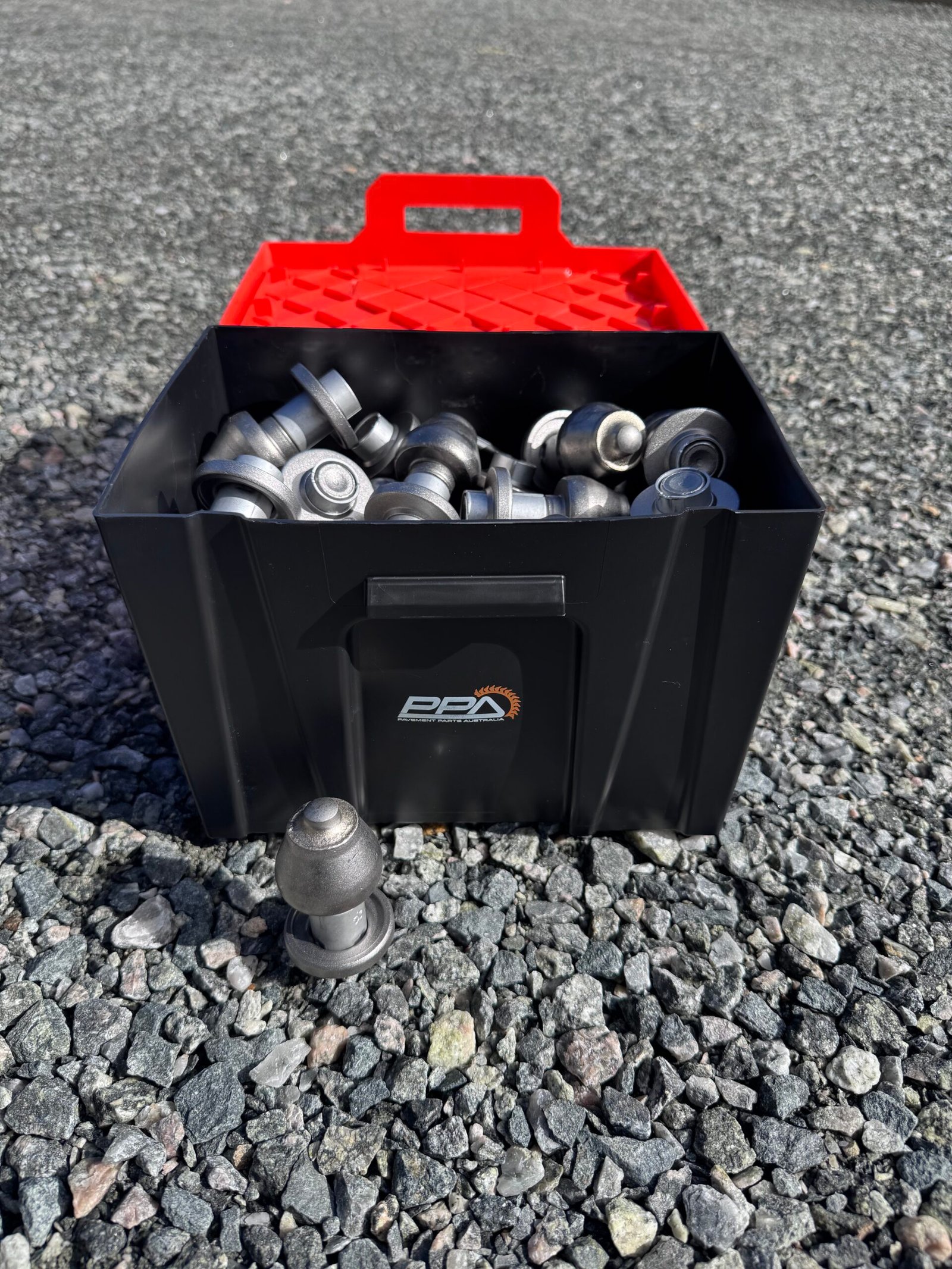
A practical checklist for evaluating a new picks supplier: product knowledge, factory relationships, documentation, local stock, and willingness to trial.
Switching wear parts suppliers or evaluating a new one for the first time — isn’t complicated, but it does require asking the right questions. The aftermarket picks market has a wide range in quality, and price alone is a poor guide to what you’re actually getting. This is a practical checklist of what to look for before you commit.
1. Do they actually know the product?
The first filter is simple: Can they discuss carbide grades, shank sizes, holder compatibility? A supplier who can’t answer basic technical questions about their own product is either reselling without direct factory knowledge or hasn’t invested in understanding what they’re selling.
2. Where does the product actually come from?
With raw material costs fluctuating significantly since China’s 2025 tungsten export controls, the number of intermediary steps between the factory and the end buyer has a direct impact on price stability and product consistency. A supplier buying direct from a manufacturer they have an ongoing relationship with is in a fundamentally different position to one purchasing through a trading company. Ask directly: do you buy from the factory, or through a trading intermediary?
3. Can they provide product documentation?
At minimum, a reputable supplier should be able to provide:
- Carbide grade specification for current stock e.g. HRA hardness, TRS, WC content, grain size.
- Whether the carbide is virgin or recycled material.
- Material or quality certification from the manufacturer.
- Dimensional drawings or specs for the pick types you’re buying.
In the current market, some suppliers have quietly adjusted carbide specifications without updating their documentation. Ask specifically whether the spec sheet reflects current production stock.
4. Do they hold local stock?
A supplier holding stock in Australia can respond to urgent requirements in days. A supplier shipping to order from overseas has lead times measured in weeks or months. Ask: what do you have in stock right now, and where is it held? For remote projects in the Pilbara, Kimberley, or regional WA, this question matters even more as transportation to these locations can add up to 5 business days.
5. Are they willing to run a trial?
This is the most useful signal of all. A supplier genuinely confident in their product should be willing to let you trial picks on a real project and compare results against your current supply. A refusal to trial, or significant conditions placed on a trial, usually indicates the supplier knows a direct comparison won’t go in their favour.
Before PPA was formally established, picks from our manufacturing partners were trialled directly on real civil stabilisation projects in Western Australia, compared against what was already being used on the same machines, in the same conditions. That’s still how we prefer to start new relationships. Let the picks prove it before you commit to volume.
6. What are the actual supply terms?
Look at minimum order quantities, payment terms, and what happens if there’s a quality issue. A supplier who requires large minimum orders before you’ve established their product works for your application is asking you to take on risk they should be carrying. Reasonable minimum orders exist for logistics reasons, but they shouldn’t be a barrier to trialling a new supplier.
7. Are they or their manufacturer ISO certified?
ISO certification isn’t a guarantee of quality, but it is a baseline indicator that a manufacturer has documented processes, quality control systems, and independent auditing in place. Ask whether the manufacturer holds ISO 9001 certification and whether the supplier can provide evidence of it. A manufacturer who can’t demonstrate any third party quality accreditation is a risk, particularly when you’re relying on consistent product performance across multiple batches and projects.
8. Not all offshore suppliers are equal.
It’s worth noting that most picks, including OEM are manufactured in China. The country of manufacture isn’t the issue. What matters is the manufacturer behind the product. The Australian market has seen a significant increase in suppliers offering picks at very low price points, often with no established track record, no verified factory relationship, and no local support. Inconsistent carbide quality and poor dimensional tolerances mean the cost per metre often tells a very different story to the unit price. A supplier who can demonstrate a verified, ongoing relationship with their manufacturer and a documented quality history is worth paying attention to — regardless of where the product is made.