
How to compare carbide grade in cutting picks and why it matters for your cost per metre
When you’re evaluating picks from a new supplier, the conversation usually goes to price first. Fair enough, margins matter. But the number that actually tells you whether you’re getting a good deal isn’t the unit price. It’s your cost per metre of cut. And the single biggest variable in that number is carbide grade.
What is carbide, and why is it in picks at all?
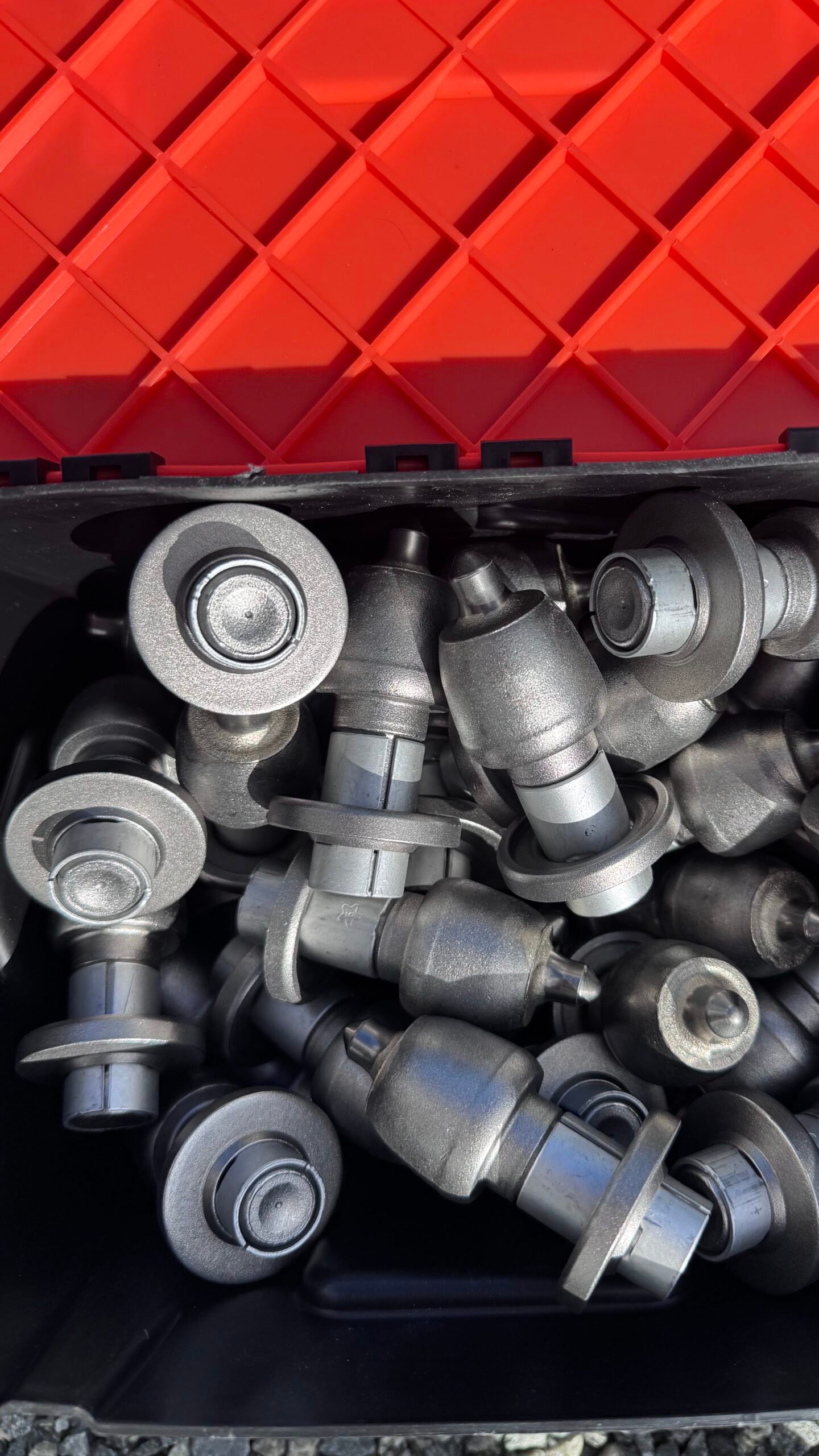
The tip of every PPA milling pick or stabiliser tooth is made from tungsten carbide an extremely hard material that can withstand the impact and abrasion of cutting through bitumen, concrete, and compacted base material. Without it, the steel body of the pick would wear out in hours.
Tungsten carbide is not a single material. It’s a composite, tungsten carbide particles bonded together with a metallic binder (usually cobalt). The ratio of carbide to binder, the size of the carbide particles, and the manufacturing process all affect how the tip performs under different conditions.
The properties that matter most
Tungsten carbide content (WC%)
The WC percentage is the most fundamental indicator of carbide quality it tells you how much actual tungsten carbide is in the tip versus the binder. Higher WC content means more hard-wearing material in contact with the ground. PPA’s carbide is specified at 93.5–94.5% WC a high carbide content that prioritises wear resistance. Some lower-cost suppliers run WC content below 90%, which directly reduces hardness and wear life even if the pick looks identical from the outside.
Virgin vs recycled carbide
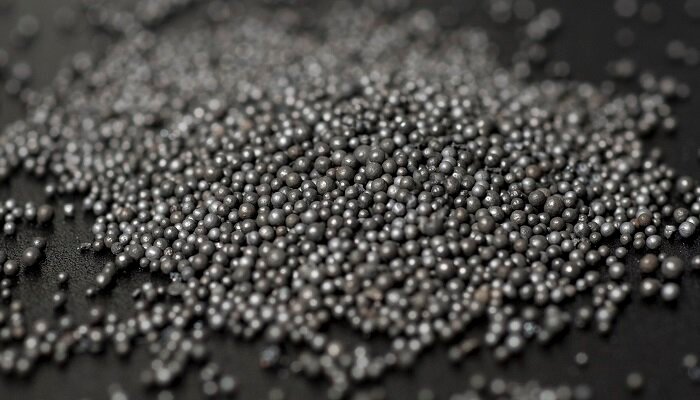
Tungsten carbide can be produced from virgin raw material or from recycled carbide reclaimed from worn picks, drill bits, and other tooling. Recycled carbide is significantly cheaper to produce, which is why it appears in lower-cost picks. The problem is consistency recycled carbide can contain trace contaminants from its previous use that affect both hardness and TRS, and the grain structure is less uniform than virgin material. This shows up as inconsistent wear life between batches and higher rates of tip fracture.
PPA’s picks are manufactured using virgin tungsten carbide only the 30.8g in the PPA6HS/22 and PPA6HS/20, and the 50g & 41.5g in the PPARZZ22/22 and PPA7HS/20, are all virgin material. When comparing suppliers, virgin carbide is worth asking about specifically, it won’t always be volunteered.
Hardness (HRA)
Hardness is measured on the Rockwell A scale (HRA) and tells you how resistant the carbide tip is to abrasion and surface wear. Higher HRA = slower wear in abrasive cutting conditions. PPA’s carbide is specified at 87.6–88.4 HRA a hardness range suited to the abrasive conditions common in Australian road milling and stabilisation work.
Transverse Rupture Strength (TRS)
TRS is measured in N/mm² and is the real indicator of how well a carbide tip resists fracturing under load. It’s what determines whether a tip chips or cracks when it hits a rock inclusion, a piece of reinforcement, or a hard aggregate. A higher TRS means the tip can absorb impact without failing. PPA’s carbide is specified at a minimum TRS of 2200 N/mm².
Grain size
Grain size is measured in microns (μm) and affects both hardness and fracture resistance. Finer grains produce harder, more wear-resistant carbide. Coarser grains increase toughness but reduce hardness. PPA’s carbide uses a grain size of 4.0–6.0 μm — a medium grain specification that balances wear resistance with fracture toughness across both milling and stabilisation applications.
Cobalt content
Cobalt is the metallic binder that holds the carbide particles together. Higher cobalt content increases TRS (fracture resistance) but reduces hardness. Lower cobalt produces harder, more wear-resistant carbide. PPA’s carbide is specified at 5.5–6.5% cobalt — a low-to-medium binder content that prioritises hardness and wear resistance while maintaining adequate fracture toughness for the variable conditions encountered in civil construction.
Porosity
Porosity refers to voids or inclusions in the carbide structure, essentially defects that reduce both hardness and TRS. It’s graded A, B, and C with lower numbers being better. PPA’s carbide is rated A02, B00, C00 indicating an essentially void-free microstructure with no B or C class porosity. This is a quality indicator that many suppliers don’t publish.
What to ask any supplier
- Hardness in HRA?
- TRS in N/mm² what is the minimum?
- Cobalt content as a percentage, what is the specified range?
- Is the carbide virgin or recycled?
- Is this specification current?
- Has it changed in the last 12–18 months?
Carbide specifications only tell part of the story, the rest is proved on the job. A simple way to compare picks from two suppliers: get a unit price from each, run a trial on a consistent section (same machine, same material, same operator), count picks replaced, then divide: (unit price × picks used) ÷ metres cut = cost per metre. A pick that costs 20% more but lasts 40% longer is a better deal every time. The trial is the only way to know for certain.
PPA can provide full carbide specification documentation for our pick range on request. If you want to run a comparison trial against your current supplier, we can set that up.